The Conference at Intelligent Robotics FAIR 2026 will feature multiple tracks showcasing cutting-edge research in robotics, field robotics, ethology-inspired systems, and intelligent technologies. Renowned researchers and industry experts will present breakthrough findings in keynote speeches and presentations, discussing the challenges and opportunities shaping the future.
Focus & Scope:
Artificial Intelligence for Robotics Human Robot Interaction Human-Robot Collaboration Autonomous Systems Field Robotics Industrial Automation Computer Vision Intelligent Sensors Swarm Robotics Cyber-Physical Systems Soft Robotics Assistive Robotics Education & Robotics Smart Manufacturing Applied cognitive science
Robotics and Automation: New methods, algorithms, and systems in industrial and field robotics.
Ethorobotics and Bio-Inspired Systems: Insights from ethology applied to robotics, bio-mimetic design, and animal-robot interaction.
Intelligent Systems: AI-driven solutions in robotics, machine learning applications, and autonomous systems.
Human-Robot Collaboration: Advances in human-robot interaction, safety, and usability in industrial and social contexts.
Edutainment and Science Communication: Creative approaches to using robotics and intelligent systems for education and entertainment, including gamification, immersive experiences, and innovative outreach programs.
Applications and Case Studies: Real-world use cases demonstrating robotics solutions across industries, from agriculture to healthcare and logistics.
Important Dates
Submission Deadline (last extension): Apr. 30
Notification of Acceptance: May. 1 (May 15 for submissions after Apr. 15)
Early Bird Deadline: May 15
Camera ready Paper Submission: June 10
Registration Deadline: June 12
Keynote Speakers

Trygve Thomessen
PPM Robotics AS
Talk: Service Robots in Nursing Homes: Urgent Demand and Complex Multidisciplinary Challenges
The current demographic trend, often referred to as the “elderly wave,” is expected to create a significant shortage of caregivers in the coming years. The application of modern robotic technology is among the few measures that can help address this resource challenge. When implemented effectively, it can free up valuable time for higher-value tasks—particularly providing care and medical treatment to residents in home care services and nursing homes.
However, operating service robots in mixed and unstructured environments such as nursing homes introduces new challenges related to reliability, user-friendliness, and particularly safety. Residents in these settings often have impaired cognitive or physical abilities and may therefore be unable to take full responsibility for their own safety. In addition, robots must also address perceived safety in order to prevent discomfort or anxiety among residents.
This presentation will highlight the significant potential benefits of introducing service robots in nursing homes, while also addressing the new challenges that arise when operating robots in such environments. In these settings, robots must function efficiently, safely, and harmoniously in a mixed environment that includes both caregivers, residents, and visitors.
Bio: Prof. Trygve Thomessen, the managing director of PPM, has his MSc and PhD from The University in Trondheim (NTNU), Norway. He was until 2001 Scientist at the research institute, SINTEF, in Norway.
In 2000, Prof. Thomessen established the high-tech robot system integrator, PPM Robotics AS, and has since then been the Managing Director.
Prof. Thomessen was during 2005-2011 part time professor in industrial robotics at NTNU and is currently Industrial Professor at University of Debrecen (Hungary) and Visiting Professor at Chuo University (Japan).
In 2020 PPM Robotics AS changed focus to service robots for elderly care and is currently developing a significant business within this area.
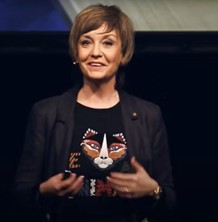
Csilla Csukonyi
University of Debrecen, Institute of Psychology
Talk: Organic Human-Robot Interaction: Psychological Aspects to Help Social Robots Become Sociable Indeed
The development of social robots has made significant technological advances in recent decades, but achieving truly natural and organic human-robot interactions remains a multidisciplinary challenge. This presentation aims to demonstrate how psychological factors, particularly findings from social and cognitive psychology, can improve the fluidity of human-robot interactions. The presentation applies practical examples on how to integrate a psychological approach to promote the acceptance of social robots in educational, healthcare, and service environments. Finally, the talk discusses that the social robots of the future will become "sociable" not only through algorithmic developments, but also through the integration of the latest research results in robot psychology.
Bio: Csilla Csukonyi is a work-organisational and sport-diagnostics psychologist, a senior researcher at the Institute of Psychology at the University of Debrecen. She is the head of the Digital Interactions Research Group and a member of the Cognitive Etho-engineering and Robots interdisciplinary research group at the UD. She is a member of the Work- and Organisational workgroup of EFPA (European Federation of Psychologists' Associations) and COST Action Leverage Work group (WG4 - Ageing and technology). She has been a member of the Hungarian EuroPsy Committee since 2021. She researches Human-Robot Interaction (HRI), facilitating ethical cooperation between humans and robots in workplaces, and digital interactions research on human interactions mediated by AI. In the Digital Interaction Research group, she works with a NAO7 robot to explore psychological aspects of HRI. Their goals are to explore the application possibilities of human-robot and artificial intelligence interactions, emphasising their role in the healthcare and organisational efficiency, in harmony with the development and promotion of ethical (social, emotional needs and respect for human values) human-robot relationships.

Nicolas Ragot
CESI LINEACT
Talk: Exploring Digital Twin Opportunities: Building Hybrid Worlds for Industrial AI
Industrial AI and robotics increasingly depend on large, diverse, and reliable datasets to enable robust perception in complex manufacturing environments. In this keynote, I will present recent research conducted at CESI on how digital twins can move beyond monitoring and simulation to become active engines for perception-oriented learning and decision-making. A first focus will be placed on data generation strategies, showing how high-fidelity synthetic data can support the training of object detection and 6D pose estimation models for industrial applications. A second focus will address the emerging concept of augmented perception, in which virtual and real-world information are tightly coupled to enhance robot navigation and improve the resilience and robustness of manufacturing systems. Overall, this keynote will discuss how perception, simulation, and scene understanding can jointly contribute to the next generation of intelligent cyber-physical manufacturing systems.
Bio: Dr. Nicolas RAGOT is an Associate Professor at CESI LINEACT laboratory, CESI School of Engineering, France. He received his PhD in Computer Vision from the University of Rouen in 2009. He was an Associate Professor at ESIGELEC School of Engineering from 2009 to 2021 before joining CESI in 2021. His research interests include perception, scene understanding, and robotics for industrial applications, with a particular focus on bridging Digital Twin and Real-World information. He is also involved in the scientific coordination and management of metropolitan, regional, and European research projects. He is currently serving as General Co-Chair of the workshop Perception, Interaction and Decision-Making for Human Cyber-Physical Systems, held in conjunction with ICPR 2026 Conference
Moderator
Barnabás Málnay
ELTE Eötvös Loránd University
Trygve Thomessen
PPM Robotics AS
Csilla Csukonyi
University of Debrecen
Nicolas Ragot
CESI LINEACT
János Botzheim
ELTE Eötvös Loránd University
Zoltán Istenes
ELTE Eötvös Loránd University